What is external validation? And why is it not always your answer?
It has been a while since the last article on my blog. Since Tet 2026 is coming, I want to talk about the topic of external validation – or the strong desire to seek approval from the external world and why it matters for many.
First of all, the term ‘validation’ may refer to many concepts in different situations, from philosophy and medicine to even entrepreneurship. Although there are certain differences and applications, it fundamentally refers to the act of obtaining approval, recognition or acceptance from others and external systems to ‘valuate’ our own self-worth. In the scope of this blog, let us learn more about the philosophical and psychological dimensions of this term.
1. What is External Validation?
1.1. Definition
So, what is external validation?
Can you remember the last time you felt ‘hyped up’ by social media likes or experienced the constant need for workplace praise? In today’s hyper-connected world, it is tempting for many people to find themselves trapped in a cycle of seeking approval from external sources.
External validation is usually defined as ’the act of seeking approval from others to define one’s self-worth’ (Fiveable, 2024). It reveals itself in countless forms throughout daily life: compliments on appearance from coworkers, praise from supervisors for job performance, likes and comments on social media posts, recognition from family and friends for achievements, or even confirmation on an already-known question.
1.2. The Science Behind This Phenomenon
The Developmental Origins
The Childhood Phase
Back in the childhood phase, there is a wealth of established research on how a child develops healthy social and emotional functioning. In 1958, psychologist John Bowlby was one of the first to formally study the concept of an attachment bond. According to Bowlby (1958), children instinctively form emotional attachments to their caregivers to obtain a sense of safety. As a result, attachment theory proposes that children develop internal working models based on early caregiver interactions. These models shape expectations of self-worth and how others will respond (Bowlby, 1988). In simpler words, if caregivers or parents are consistently responsive, children internalise a sense of being valued – a form of external validation from a very early childhood phase. Conversely, unresponsive caregiving can lead to insecure attachment, where children may seek external validation more intensely to compensate for internal doubts. These children, sadly speaking, learn that acceptance is conditional, dependent on meeting external standards rather than being inherently deserved.
A more well-known model for this is Maslow’s hierarchy of needs. As we may know about the ’levels’ of needs of individuals, it suggests that individuals must satisfy lower-level needs before they can focus on higher-level needs, ultimately leading to personal growth and fulfilment (Maslow, 1943). Therefore, after fulfilling basic needs at the lower levels (that is, physiological and safety needs), humans will naturally seek love, belonging and acceptance from group members, which is exactly what external validation provides. However, as we need more validation just to ‘valuate’ our self-worth, if these cannot be satisfied, it will prevent us from achieving the self-actualisation need, the highest level in the above-mentioned framework.
The Inter-dependent World
If external validation originated from a very early phase, today’s inter-dependent and online interaction has likely helped amplify the desire into a constant, quantifiable measure of worth. From years ago, when social media first emerged, where the fame of one is measured by the count of interactions, to more recently where new platforms like Threads (also known as Threads City in Vietnam) provide a place to ’exhibit’ achievements and opinions online as a new norm among many. This quantification makes validation-seeking behaviour more explicit and more addictive because of deliberate ‘behavioural design’ intended to hijack the brain’s natural reward circuitry (Eyal, 2014).
Research demonstrates that social media use amplifies validation-seeking behaviour by providing platforms for constant comparison and instant feedback. Heavy social media use – defined as more than three hours daily – shows significant associations with higher depression, anxiety and lower self-esteem (Keles et al., 2020). The constant exposure to curated, idealised images create a distorted reality that leads to dissatisfaction and feelings of inadequacy.
The Body and Chemicals
External validation’s addictive quality stems from its neurological effects. When someone provides positive feedback or approval, the brain releases dopamine, a neurotransmitter responsible for pleasure, motivation and reward (Schultz, 2015). This dopamine release creates what neuroscientists call a ‘reward pathway’ (Berridge & Robinson, 2016). But, as always, a sense of happiness or state of feeling is temporary and not permanent. No one can feel ‘happiness’ or ‘desperation’ all the time. And when the dopamine from the external validation decreases, it creates a cycle similar to substance dependence: the pursuit of validation, the temporary high when receiving it, the crash when it fades, and the renewed desperation for more.
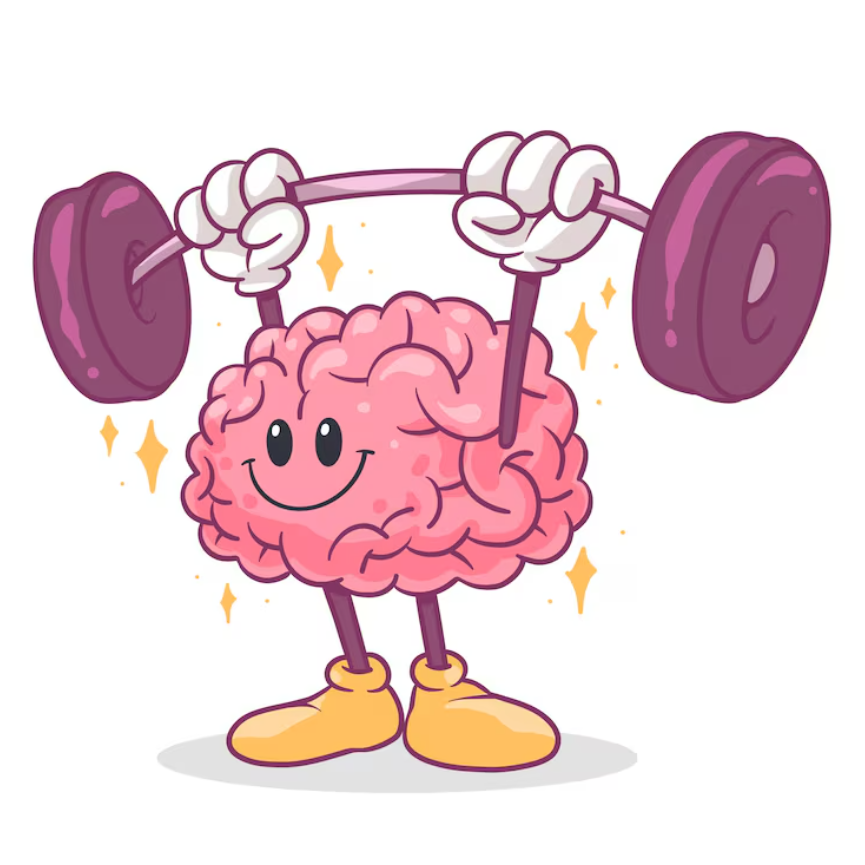
Each instance of external validation triggers a dopamine release, creating a positive reinforcement loop that gradually increases the desire for more validation. Like other dopamine-driven behaviours, this creates dependency – individuals start needing more frequent and intense validation to achieve the same level of satisfaction.
Source: Freepik
2. Why External Validation is Not Always an Answer
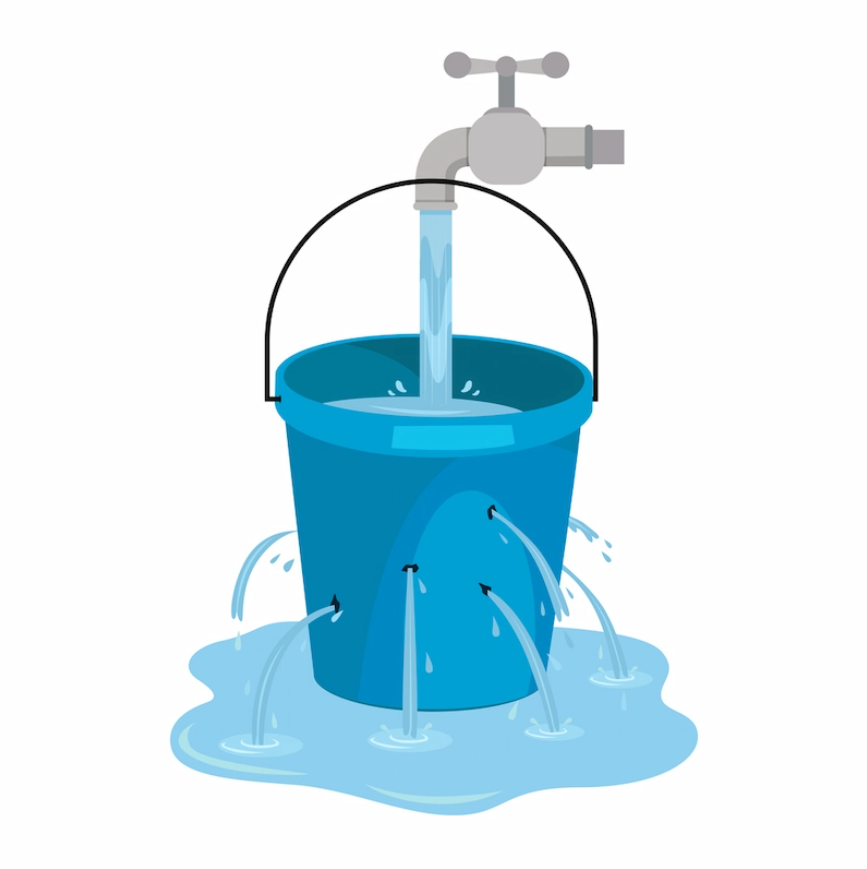
Most fundamentally, basing self-worth on external validation creates a volatile, unstable foundation for self-esteem. And the validation becomes fuel for the ‘machine’ (the seekers) to function. Being told you are good may give you the hype, but it alone cannot create more value and development for your future self, whilst the dependency on the chemicals released for being ‘valuable’ when validation is present increases.
When self-worth becomes dependent on external feedback, a cascade of psychological problems emerges. Validation-seekers experience dramatic emotional swings based on others’ responses. This emotional volatility is exhausting and prevents emotional equilibrium. The constant pressure to gain approval creates chronic anxiety, with studies consistently linking excessive validation-seeking with higher rates of anxiety.
Source: terranovapoolinspection.com/ CC BY-NC 4.0
And, perhaps most tragically, excessive validation-seeking requires individuals to alter their behaviour, opinions and identity to meet social expectations. Over time, this creates a false self or a persona designed to attract approval rather than express genuine identity. The disconnect between authentic self and performed self creates profound feelings of emptiness and disconnection.
Concisely, external validation alone won’t help us to create more value and is not a definite answer for our problems, whilst being dependent on others’ approval if not managed appropriately can be harmful.
3. When You Need External Validation
The ‘validation’ itself is not a bad thing. External validation serves essential psychological and social functions when properly balanced. Sometimes, a friend just needs praise on their achievement they really deserve to continue, or a colleague needs proper compensation and praise from managers and supervisors for what they bring to the team. External validation can defeat negative self-perceptions and build self-esteem. For individuals struggling with self-doubt, external recognition can provide the initial spark of confidence needed to take risks and pursue goals. Also, seeking others’ approval and help can be a trait of vulnerability. And it shows willingness to connect and provides a sense of belongingness. The conversation can deepen relationships and create emotional bonds when one feels isolated or lonely.
And the feedback from others is a good thing if presented objectively. In business and entrepreneurship, a model can only be proved to work if it obtains traction, or the true signal that the market ‘accepts’ the offerings or the business model.
Research shows that both internal and external validation are needed for psychological health. What psychologists call ‘co-regulation’ (external validation) combined with ‘self-regulation’ (internal validation) creates a healthy nervous system. External validation becomes unhealthy only when not counterbalanced by self-validation.
Conclusion: Toward Authentic Self-Worth
External validation represents a fundamental human need. It is the desire to belong, to be recognised and to matter within our communities. This need is neither inherently destructive nor something to be eliminated. The challenge lies not in rejecting external validation entirely but in developing a balanced relationship with it, where external feedback enriches an already-present sense of internal worth rather than constituting its foundation.
Rather, the goal is what psychologists call differentiation: maintaining clear self-boundaries and internal validation whilst remaining emotionally connected to others. This balance allows individuals to receive validation when it’s offered without needing it for basic psychological functioning, to weather criticism without devastation, and to make choices aligned with authentic values rather than social approval.
The transformation from external validation dependency to authentic self-worth represents one of the most significant psychological achievements possible – the development of a stable, resilient sense of self that can engage with the social world without being defined by it.
Citations
Berridge, K. C., & Robinson, T. E. (2016). Liking, wanting, and the incentive-sensitization theory of addiction. American Psychologist, 71(8), 670–679. https://doi.org/10.1037/amp0000059
Bowlby, J. (1958). The nature of the child’s tie to his mother. International Journal of Psycho-Analysis, 39, 350–373.
Bowlby, J. (1988). A secure base: Parent-child attachment and healthy human development. Basic Books.
Eyal, N. (2014). Hooked: How to build habit-forming products. Portfolio.
Fiveable. (2024). External validation. In AP Psychology vocabulary. https://fiveable.me/key-terms/ap-psych-revised/external-validation
Keles, B., McCrae, N., & Grealish, A. (2020). A systematic review: The influence of social media on depression, anxiety and psychological distress in adolescents. International Journal of Adolescence and Youth, 25(1), 79–93. https://doi.org/10.1080/02673843.2019.1590851
Maslow, A. H. (1943). A theory of human motivation. Psychological Review, 50(4), 370–396. https://doi.org/10.1037/h0054346
Schultz, W. (2015). Neuronal reward and decision signals: From theories to data. Physiological Reviews, 95(3), 853–951. https://doi.org/10.1152/physrev.00023.2014
